What is the best way to start binary options trading as a complete beginner?
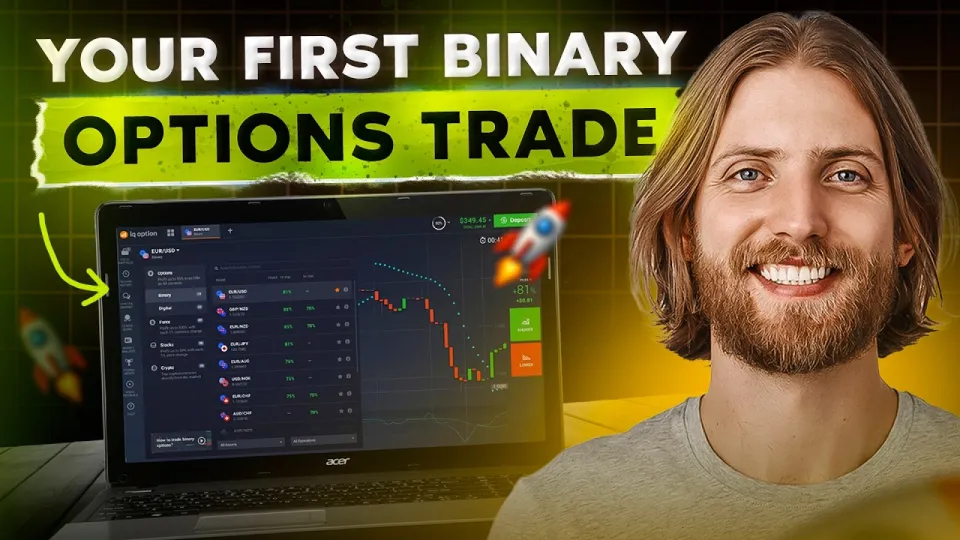
Video: Binary Options | Binary Options Tutorial for Beginners | Where Should You Start?
· based on the channel Binary options tutorial for beginners
Key takeaways
- A binary option is an all-or-nothing contract: you predict whether an asset will be above or below the strike price when the expiry timer ends.
- Typical payouts on beginner platforms sit around 80-95% on a win, while a loss costs the full stake.
- Three platforms repeatedly recommended for newcomers are Quotex, Pocket Option and Binarium.
- Risking 1-2% of the account balance per trade keeps a losing streak survivable.
- A first-week plan is 10-20 demo trades per day, one asset and one expiry length.
Binary options are short-term contracts where you decide whether an asset will finish above or below a chosen price when a timer runs out, and you either collect a fixed payout or lose your stake. For a beginner the correct starting point is not a strategy but the basics: learn how the contract settles, open a demo account on a regulated-by-your-standards platform such as Quotex, and trade one asset with 1-2% of the balance per position until the mechanics feel automatic.
How does a binary option trade actually work?
A binary option is a yes-or-no bet on price direction with a fixed expiry, so the trader never owns the underlying asset. You pick an instrument (currency pair, stock, index or crypto), set the stake, choose an expiry of typically 30 seconds to a few hours, and press Up or Down. If the price is on the correct side of the strike when the contract expires, the position pays out; if not, the stake is gone. There is no partial exit and no stop-loss inside the trade, which is why position size matters more here than in spot trading.
Payouts on the platforms popular with beginners usually land in the 80-95% range on a winning trade, while a loss costs 100% of the stake. That asymmetry is the single most important number to understand: at an 85% payout you need a win rate above roughly 54% just to break even. Many brokers also offer early closure, letting you sell a losing position back before expiry at a reduced loss, but the price of that exit is set by the platform, not by you.
What should a beginner set up before the first trade?
Preparation is four concrete steps, and none of them involve predicting the market.
- Choose the platform and verify the account. Quotex, Pocket Option and Binarium are the three names that come up most often in beginner tutorials; compare minimum deposit, payout levels, withdrawal terms and whether a demo account is unlimited.
- Fund only with risk capital. Money you cannot afford to lose entirely, because a losing streak of five trades in a row is statistically normal even with a decent edge.
- Set the stake rule before trading. One to two percent of the balance per contract is the standard recommendation; on a $200 account that is $2-4 per trade, not $20.
- Pick one asset and one expiry. EUR/USD with a 1-5 minute expiry is the usual starting point because liquidity is high and price behaviour is easier to read.
Which binary options platform fits a first account?
Platform choice for a beginner comes down to three practical criteria: payout size, withdrawal reliability and the quality of the demo mode. Quotex is the most frequently recommended entry point, with a low minimum deposit, a full demo account and a modern interface that runs in the browser. Pocket Option is known for a wide asset list, social trading features and generous bonuses, though bonus funds usually carry turnover conditions. Binarium positions itself around a simpler interface and a smaller minimum deposit, which suits people who want to test the waters with a tiny balance.
Whichever platform you register on, check the withdrawal section before depositing: minimum withdrawal amount, processing time and whether the payment method matches your deposit method. A payout of 90% is meaningless if the money cannot leave the account.
What risk rules keep a beginner account alive?
The only rule that matters early on is that no single trade can meaningfully damage the account. Risking 1-2% per contract means ten consecutive losses cost about 10-20% of the balance, which is recoverable; risking 10% per trade means the same streak wipes out most of the account. Set a daily loss limit (for example 5% of the balance) and a daily profit target (5-10%) and stop trading when either is hit, because overtrading after a loss is the most common way beginners blow up.
Avoid martingale doubling after a loss. It looks like a recovery system until five losses in a row arrive, and with payouts under 100% the required stake grows faster than the potential win. A flat stake with a documented win rate tells you far more about whether your approach works.
How should the first week of trading be structured?
A first week should be a measurement exercise, not a profit attempt. Trade 10-20 positions per day on the demo account, all on the same asset and the same expiry, and write down the reason for each entry: a support or resistance level, a trendline bounce, a news release, or nothing at all. At the end of the week count the win rate and compare it with the break-even threshold implied by your platform's payout.
If the demo result is above break-even after at least 50-100 trades, move to a small live account with the same stake rule. If it is not, the problem is the entry logic, not the platform, and no deposit size will fix it. Technical tools that beginners actually use are horizontal levels, moving averages and candlestick patterns on the 1-minute and 5-minute charts; economic calendar releases are usually avoided rather than traded, since spreads and spikes behave unpredictably around them.
What do beginners most often get wrong?
Most beginner losses trace back to three habits rather than bad luck. The first is trading too many assets at once, which makes it impossible to learn how any single one behaves. The second is chasing very short expiries of 30-60 seconds, where the outcome is close to a coin flip and the payout edge sits with the broker. The third is treating bonuses and promo codes as free money without reading the turnover requirement attached to them.
A fourth, quieter mistake is skipping the record-keeping. Without a log of entries, stakes and results, a trader cannot tell a real edge from a lucky week, and the same errors repeat on the live account.
All platforms and tools mentioned
- Quotex registration: https://dakaklik.com/_quotex?creative_id=WzzpYsjS3ps
- Pocket Option: https://dakaklik.com/_PocketOption?creative_id=WzzpYsjS3ps
- Binarium: https://dakaklik.com/_Binarium?creative_id=WzzpYsjS3ps
- NordVPN (for secure access to trading accounts on public networks): https://dakatop.link/Nord_us?creative_id=WzzpYsjS3ps
The bottom line on starting with binary options
Binary options reward discipline far more than prediction: fixed payouts, fixed expiries and an all-or-nothing settlement mean that stake sizing and record-keeping decide the outcome before any chart pattern does. Start on a demo account, keep risk at 1-2% per trade, master one asset and one expiry, and only scale up after 50-100 logged trades show a win rate above the break-even threshold. The video breakdown on the Binary options tutorial for beginners channel walks through the same starting sequence for anyone who prefers to watch it step by step. When you are ready for a first account, you can open a Quotex account here and begin in demo mode.
Source: Binary Options | Binary Options Tutorial for Beginners | Where Should You Start? · Markdown version
Questions & answers
How much money do I need to start binary options trading?
Most beginner-friendly platforms accept deposits from around $10-50, and Quotex, Pocket Option and Binarium all operate in that range. The deposit size matters less than the stake rule: keep each trade at 1-2% of the balance, so a $50 account means $0.50-1 per contract. Starting on demo costs nothing and is the recommended first step.
Are binary options gambling or trading?
The mechanics are closer to a fixed-odds bet than to spot trading, because the payoff is all-or-nothing and the platform sets the payout. That said, outcomes can be influenced by reading levels, trends and timing, and disciplined traders treat it as a probability exercise with strict stake sizing rather than as a casino game.
What win rate do I need to be profitable?
At an 85% payout you need a win rate above roughly 54% to break even; at 90% the threshold is about 53%. Below those numbers the account slowly bleeds even with good money management. This is why beginners should log 50-100 demo trades and calculate the actual win rate before going live.
Why do beginners lose money on binary options?
The usual causes are oversized stakes, martingale doubling after losses, very short 30-60 second expiries and jumping between too many assets. Add unread bonus conditions and no trade log, and the result is a random sequence of bets rather than a tested approach. Fixing stake size and keeping records removes most of the damage.